

“The scale of the opportunity for the North East – and for the UK as a whole – is huge.”
The words of Leo Bertels, Senior Manager at The Crown Estate, as he powerfully summarised what Offshore Wind Leasing Round 6 could mean for the supply chain at Offshore Wind North East.
Anticipation is certainly building for the official launch of the new leasing round next year… and that was evident from the conversations we had at OWNE 26 in Sunderland on November 12, and how it shaped much of the flagship event’s content.
It’s no surprise that there is a tangible sense of excitement: The Crown Estate has plans to open up 6GW of additional capacity in sites predominantly off the coast of North East England. This, The Crown Estate says could create up to 10,000 direct jobs and boost the UK economy by more than £12 billion.
Representatives of consulting engineers Haskoning, addressing the opportunity in a dedicated session at OWNE, predicted that the additional capacity could translate into 400 turbines and foundations being placed off the North East England coast. “There’s quite a bit to get on and build,” commented Stuart White, Haskoning’s Director of Offshore Wind Ports & Shipyard Infrastructure, on the manufacturing opportunity.
As Event Marketing Partner for organiser NOF and an exhibitor at Offshore Wind North East once again, we had a front row seat for a day of deep insight and lively debate at the Beacon of Light.
Here are some of our key takeaways:
1. PORT INFRASTRUCTURE
Expanding and improving North East England’s port infrastructure will be key to delivering on the Leasing Round 6 opportunity. More land for marshalling, heavy-lift capacity berths and cranes, and facilities capable of handling new foundation designs will be essential. Supply chain opportunities will flow from this.
The good news is that the region’s ports are already planning ahead. For example, on the day of OWNE, Port of Blyth launched its Future Ready strategy, investing £200 million to transform the port’s infrastructure and strengthen its position as one of the UK’s leading offshore clean energy hubs.
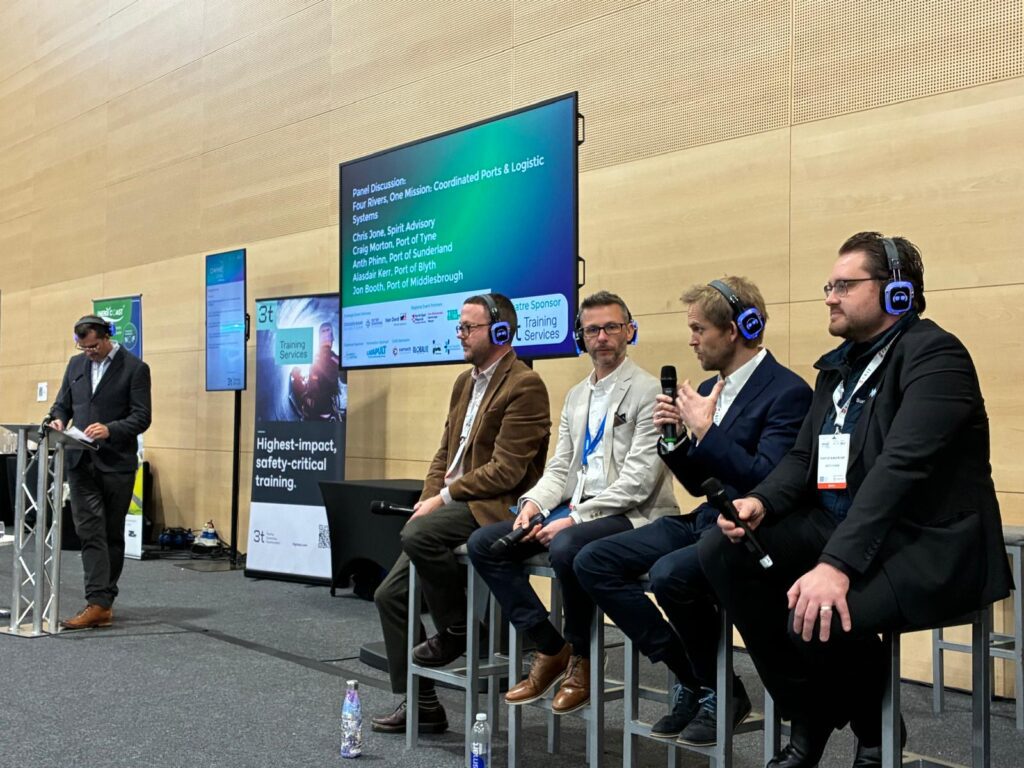
A session on ‘Four Rivers, One Mission – Coordinated Ports & Logistic Systems’ also demonstrated how ports on the Blyth, Tyne, Wear and Tees can collaborate and bring their combined strengths to bear, delivering projects using a multi-port model.
2. INNOVATION
The focus of Leasing Round 6 will be on deeper waters of up to 95 metres. This will require different technologies and foundation designs to those employed on developments such as Dogger Bank Wind Farm. Hybrid solutions and further innovation will be needed, opening up new opportunities for market disruptors and emerging, tech-focused businesses.
Innovation across the offshore wind space was a recurring theme at OWNE and this year, the North East Offshore Wind Innovation and Demonstration (NEOWIND) programme announced its first eight winning companies. They’ll take part in the programme from now until July 2028, and receive a share of £1.87 million to support their technologies. Kinewell, Acuity Robotics and SeaThor were among the successful businesses.
3. FINANCE
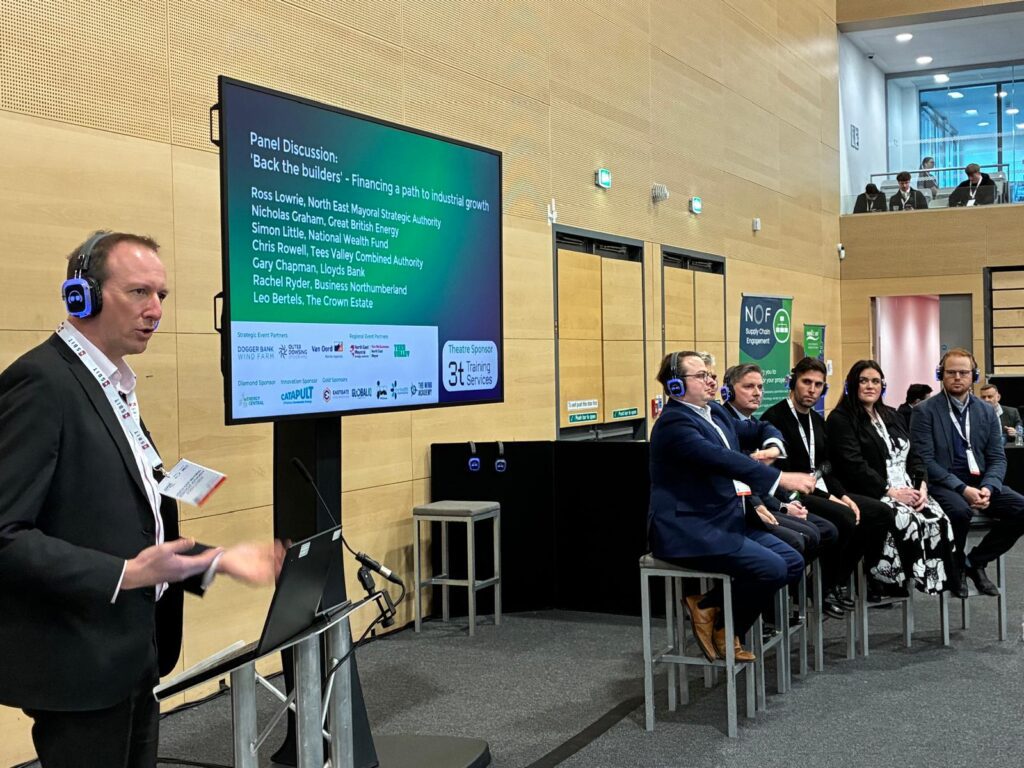
OWNE’s ‘Back the Builders – Financing a Path to Industrial Growth’ panel session highlighted that significant public and private finance is available to drive the sector.
Great British Energy’s Supply Chain Fund: Offshore Wind and Networks is one example: the fund will award up to £300 million in capital grant funding to build UK manufacturing capacity for key constrained components in offshore wind and enabling electricity networks sectors. Round 4 of the fund is now open, with applications closing on December 10, 2026.
The National Wealth Fund was allocated a further £15.4 billion of capital last month, and a key part of this is the Energy Wealth Fund, which has an initial £2 billion to invest in renewables and low carbon projects.
Gary Chapman, co-head North Region & Director – Industrials & Infrastructure at Lloyds, also outlined support from Lloyds for both offshore wind projects and enabling infrastructure. “The holy grail for us is a renewable supply chain up the North East coastline with good quality, high paying jobs. We’re really trying to get behind that.”
4. INDUSTRIAL TRANSFORMATION
In her opening address, Joanne Leng MBE, Chief Executive of OWNE organiser NOF, spoke of North East England’s “complete industrial ecosystem built for offshore wind”. She added that the region’s experience and strengths can be turned into “investments, industrial growth with high quality jobs and long-term careers in this industry”.
Her message was backed by Ross Lowrie, Head of Clean Energy and Environment at the North East Mayoral Strategic Authority and Chris Rowell, Head of Net Zero at the Tees Valley Combined Authority, who stressed the importance of ensuing that the region supply chain businesses and communities would benefit from Leasing Round 6 and the wider offshore wind opportunity. Initiatives and funding from both authorities are supporting that aim.
And as Rachel Ryder of Business Northumberland pointed out, the impact of offshore wind on reindustrialisation can be seen at first hand in areas such as Blyth, Horizon Works’ own ‘home town’. Since 2024, 7000 learners have gone through the door of the Energy Central Learning Hub and a new Energy Central Institute in the town will provide degree and PhD level education. But perhaps the energy transition is most evident on the site of the old coal-fired Blyth Power Station at Cambois, which now has a very different use. “I remember 20 odd years ago watching Blyth power station’s chimneys being demolished from my window,” said Rachel. “Now, we have JDR building subsea cables for offshore wind on that site. It’s a true transformation.”
WHAT ARE THE MARKETING PRIORITIES?
To position your business to maximise on the opportunities generated by the offshore wind sector, and the increased investment in infrastructure and manufacturing facilities that is predicted in the future, there are some key marketing actions to consider:
- Research your audiences and understand where your products and services can add value.
- Develop a marketing strategy and plan focused on engagement with the sector. Backed by research, this will be a blueprint for marketing as you move forward.
- Start building profile and brand awareness now – ensure that developers, contractors and OEMs know who you are, where you are and how you can support then.
- Shape a compelling proposition which conveys how you can solve challenges in the sector, and how you are contributing to the strength of the UK supply chain.
- Develop high impact marketing assets – from slide decks to exhibition material – to ensure you have the right tools for engagement with prospects.
SUPPORT FROM HORIZON WORKS
Interested in positioning your business for the offshore wind opportunity? Need support in shaping your marketing for the sector?
Read our guide on Preparing for a New Era for UK Offshore Wind: The Marketing Perspective here.
Contact our team to set up an initial meeting here.